
The New Visual Building Is Here
Transforming Architecture Through Digital Intelligence, Smart Infrastructure, and Human-Centered Design
Abstract
The building is no longer merely a physical structure composed of concrete, steel, glass, and mechanical systems. A new generation of intelligent environments is emerging, where architecture, digital technologies, artificial intelligence, automation, and interconnected systems converge into a unified operational ecosystem. This transformation has given rise to what may be described as the Visual Building—a structure capable of communicating, sensing, learning, adapting, and interacting with its occupants in real time.
The Visual Building represents a fundamental evolution in how humanity designs, manages, secures, and experiences built environments. Through integrated sensors, digital twins, artificial intelligence, Internet of Things (IoT) technologies, advanced visualization systems, and predictive analytics, buildings are becoming active participants in daily life rather than passive containers of human activity.
This article explores the emergence of the Visual Building paradigm, its technological foundations, societal implications, and future role in smart cities and digital societies.
Keywords
Visual Building, Smart Infrastructure, Digital Twin, Artificial Intelligence, Internet of Things, Smart Cities, Building Automation, Predictive Analytics, Digital Architecture, Human-Centered Design
Introduction
For centuries, buildings were designed primarily to provide shelter, security, and functional space. While architectural innovations improved aesthetics, structural performance, and environmental efficiency, buildings remained fundamentally static systems.
The twenty-first century has introduced a dramatic shift.
Advances in computing, cloud technologies, machine learning, sensor networks, cybersecurity, and real-time communications have enabled buildings to become dynamic digital environments capable of perceiving and responding to changing conditions.
The emergence of the Visual Building marks a transition from physical architecture to intelligent architecture.
Rather than simply occupying space, modern buildings increasingly understand their environments, monitor their systems, optimize operations, and communicate information to occupants and administrators.
The building itself becomes a living information platform.
The Evolution from Smart Building to Visual Building
Early smart buildings focused primarily on automation.
These systems controlled:
- Heating
- Ventilation
- Air conditioning
- Lighting
- Security systems
- Access controls
While effective, these systems often operated independently.
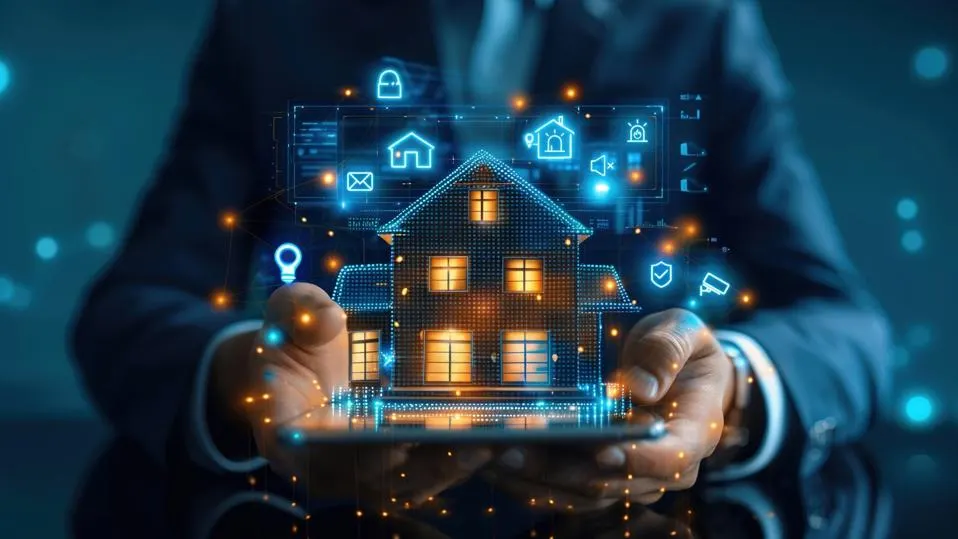
The Visual Building expands this concept by integrating multiple technologies into a unified digital ecosystem capable of providing real-time situational awareness.
The Visual Building combines:
- Smart sensors
- Digital twins
- AI-driven analytics
- Predictive maintenance
- Occupancy intelligence
- Environmental monitoring
- Cybersecurity monitoring
- Interactive visualization systems
As a result, decision-makers gain a comprehensive understanding of building operations through visual, data-driven interfaces.
Digital Twins: The Foundation of the Visual Building
One of the most transformative technologies enabling Visual Buildings is the Digital Twin.
A digital twin is a virtual representation of a physical building continuously synchronized with real-world conditions.
Information may include:
- Structural status
- Energy consumption
- Occupancy patterns
- Air quality
- Equipment health
- Security events
- Environmental conditions
Digital twins provide facility managers with unprecedented visibility into building performance.
Instead of reacting to problems after they occur, administrators can identify trends and potential failures before disruptions happen.
This shift from reactive management to predictive management significantly improves operational efficiency.
Artificial Intelligence and Building Intelligence
Artificial Intelligence serves as the cognitive layer of the Visual Building.
Machine learning systems continuously analyze incoming data to identify patterns that may not be immediately visible to human operators.
AI systems can:
- Predict equipment failures
- Optimize energy usage
- Improve occupant comfort
- Detect security anomalies
- Analyze traffic flow
- Manage resource allocation
Over time, the building develops an increasingly sophisticated understanding of its operational environment.
The result is a structure capable of continuously improving its own performance.
Enhancing Security Through Continuous Awareness
Modern security extends far beyond locks and cameras.
Visual Buildings integrate physical security with cybersecurity and environmental awareness.
Intelligent systems can monitor:
- Entry and exit activity
- Visitor movement
- Network traffic
- Environmental hazards
- Emergency events
- Access control anomalies
By correlating multiple data sources, the building develops a comprehensive situational awareness model capable of identifying potential threats before they escalate.
This capability is particularly valuable in:
- Government facilities
- Hospitals
- Educational institutions
- Research centers
- Critical infrastructure environments
Sustainability Through Intelligent Operations
Environmental responsibility has become a defining objective for modern architecture.
Visual Buildings support sustainability through continuous optimization.
Examples include:
- Dynamic energy management
- Smart lighting control
- Water consumption monitoring
- Carbon footprint reduction
- Predictive maintenance
- Occupancy-based environmental control
These systems reduce waste while simultaneously improving occupant comfort and operational efficiency.
Sustainability is no longer a separate initiative but an integrated function of the intelligent building itself.
Human-Centered Design and Occupant Experience
Perhaps the most important feature of the Visual Building is its focus on people.
Buildings increasingly adapt to human needs rather than requiring people to adapt to building limitations.
Examples include:
- Personalized environmental preferences
- Intelligent navigation assistance
- Accessibility enhancements
- Adaptive lighting systems
- Indoor positioning services
- Emergency guidance systems
By combining data with human-centered design principles, Visual Buildings create safer, healthier, and more productive environments.
The Visual Building and Smart Cities
The future of urban development lies in connected ecosystems.
Visual Buildings serve as foundational nodes within smart city infrastructures.
Through secure information sharing and interoperability, buildings can collaborate with:
- Transportation systems
- Emergency services
- Energy grids
- Environmental monitoring networks
- Public safety systems
- Municipal operations centers
The result is a more resilient and responsive urban environment capable of adapting to changing conditions in real time.
Future Directions
The next generation of Visual Buildings is expected to incorporate:
- Generative Artificial Intelligence
- Autonomous building management
- Augmented Reality interfaces
- Mixed Reality maintenance systems
- Quantum-enhanced optimization
- Advanced digital twin ecosystems
- Cognitive building assistants
- Autonomous energy balancing systems
As these technologies mature, buildings will increasingly function as intelligent partners within human environments.
Conclusion
The Visual Building represents one of the most significant architectural transformations since the emergence of modern construction methods. By integrating physical infrastructure with digital intelligence, these environments provide unprecedented visibility, efficiency, sustainability, and security.
The building of the future is no longer defined solely by its walls, foundations, or structural components. Instead, it is defined by its ability to perceive, understand, and respond to the world around it.
The new Visual Building is here.
It is connected.
It is intelligent.
It is adaptive.
And it is redefining the relationship between humanity and the built environment.